
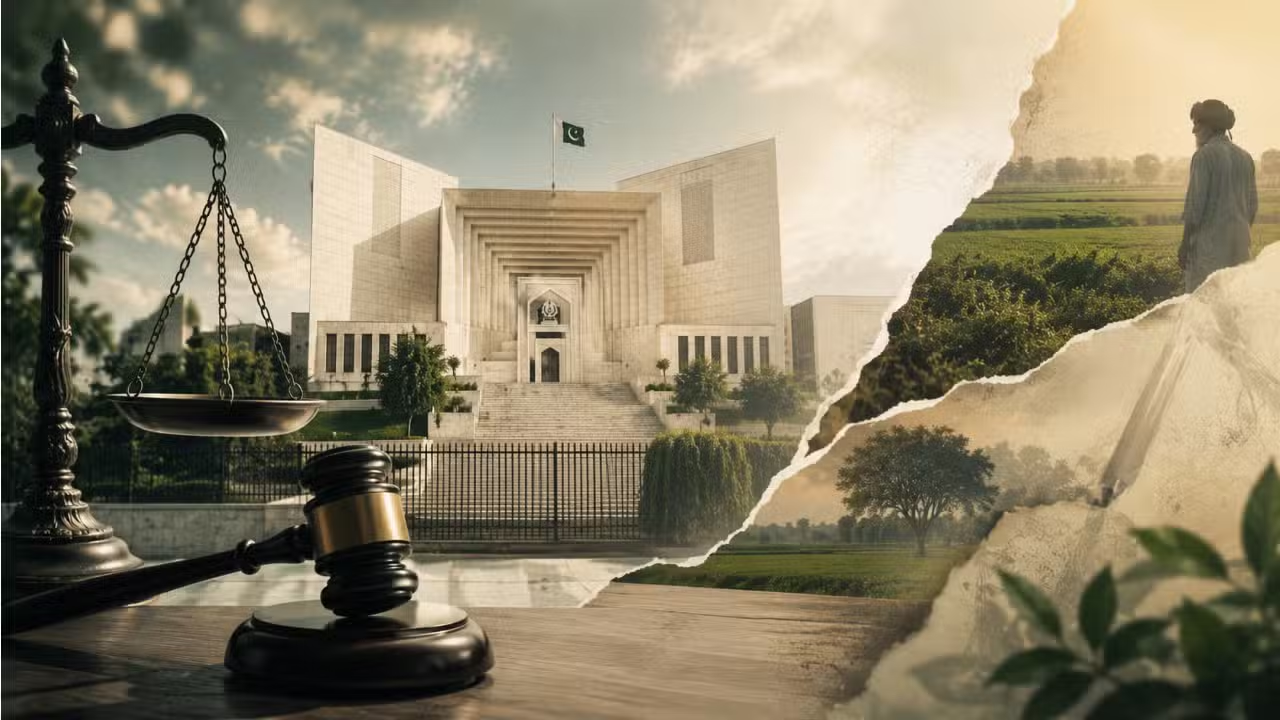
Supreme Court Orders Government to Pay Fair Market Value for Acquired Land: A Landmark Decision for Property Owners
The Supreme Court of Pakistan has delivered a significant judgment that strengthens the rights of property owners whose land is acquired for public projects. The Court has emphasized that when the government acquires private land, compensation should reflect the property’s fair market value rather than relying solely on outdated official valuation rates.
This decision is expected to have far-reaching implications for future infrastructure and development projects across the country.
Why This Decision Matters
Governments frequently acquire land for projects such as highways, dams, canals, hospitals, schools, and housing developments. While these projects serve the public interest, they often affect individuals and families who lose valuable property.
The Supreme Court has reaffirmed that public development cannot come at the cost of unfair compensation. Landowners deserve payment that accurately reflects the value of the property they surrender.
Fair Market Value vs. Official Rates
In many cases, compensation has traditionally been calculated using government-issued valuation rates, which may be considerably lower than actual market prices. This has resulted in disputes between landowners and government authorities.
The Court clarified that compensation should consider several important factors, including:
* The property’s actual market value.
* The location and commercial potential of the land.
* Future development prospects.
* Inflation and changes in property prices.
* Delays in the acquisition process that may affect land values.
This approach aims to ensure that property owners receive compensation that is fair and equitable.
The Background of the Case
The judgment arose from a land acquisition dispute in Khyber Pakhtunkhwa involving property acquired for a public canal project. Landowners challenged the compensation offered by the government, arguing that it did not represent the true value of their land.
Lower courts awarded higher compensation after evaluating market evidence, and the Supreme Court upheld those decisions, reinforcing the principle that fair compensation is a constitutional requirement.
Constitutional Protection for Property Owners
The Court recognized that the government has the authority to acquire private property for public purposes. However, it also stressed that this power carries a legal and constitutional obligation to compensate landowners adequately.
A key principle highlighted in the judgment is that owners should receive compensation equivalent to the true worth of their property, ensuring they are not placed at a financial disadvantage because of compulsory acquisition.
Impact on Future Development Projects
This ruling could influence how land acquisition cases are handled throughout Pakistan. Government departments may need to rely more on current market evidence and independent valuation instead of outdated administrative rates.
The decision may also encourage greater transparency in valuation procedures and reduce disputes between authorities and affected landowners.
What This Means for Landowners
For individuals whose land may be acquired in the future, this judgment provides stronger legal support for seeking compensation that reflects real market conditions. While every case depends on its specific facts, the ruling establishes an important precedent that fairness must remain at the center of compulsory land acquisition.
Conclusion
The Supreme Court’s decision represents an important step toward balancing public development with the constitutional rights of citizens. By requiring compensation based on fair market value, the Court has reinforced the principle that development should not result in financial injustice for property owners.
As Pakistan continues to invest in infrastructure and public projects, this judgment is likely to serve as a guiding precedent, promoting fairness, transparency, and confidence in the land acquisition process.
If you’d like, I can also optimize this article for SEO by adding a meta title, meta description, keywords, FAQs, and suggested headings.
Related reading
- Islamabad Commercial Property Market Report: October 2026
- If Your Business Were a Person — What Would Its Ideal Neighborhood Look Like?
- This Month’s Biggest Commercial Property Mistake We Saw in Islamabad — And the Lesson
Looking for commercial space in Islamabad? Browse current listings or contact our team.